Last Updated on 4 months ago by The Executive post
Your phone’s camera already uses it. So does Netflix, your bank’s fraud detection team, and probably a few deepfake videos you’ve seen on Twitter. The technology behind all of this? Generative Adversarial Networks — or GANs.
If you’ve been searching for Generative Adversarial Networks Explained in plain English, you’re in the right place. Most people have heard the term but can’t explain what it actually means. That’s a problem, because GAN-powered tools are quietly reshaping industries across India, the US, and the UK — from healthcare diagnostics to stock photo generation to financial fraud prevention.
By the end of this article, you’ll understand exactly what a GAN is, how it works without any math degree required, where it’s being used right now, and what mistakes people commonly make when thinking about this technology. No jargon left unexplained.
Table of Contents
What is a Generative Adversarial Network?
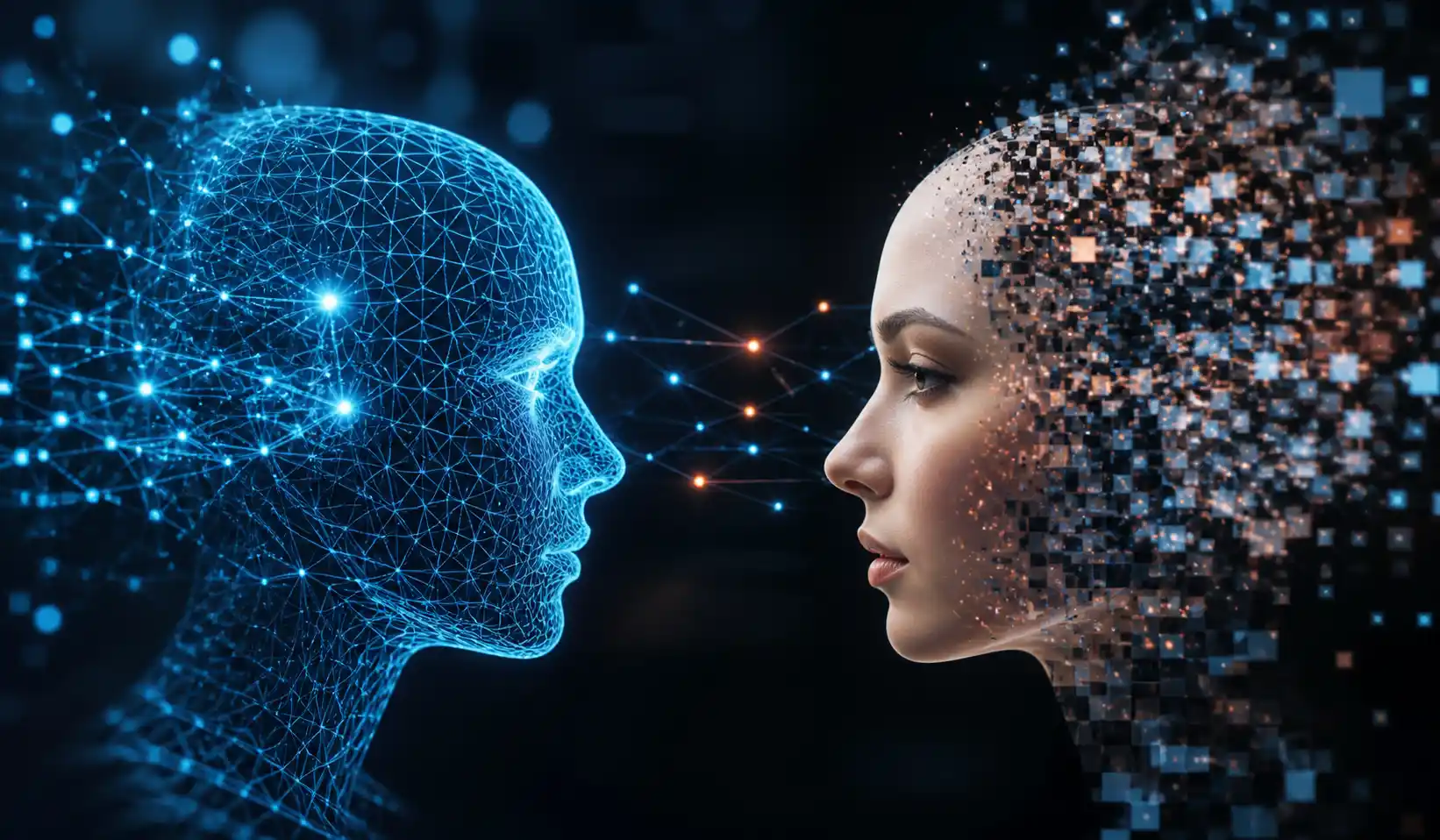
Imagine two people: a forger and a detective. The forger tries to create fake paintings that look real. The detective tries to catch fakes. Every time the detective spots a fake, the forger goes back, studies the feedback, and makes a better forgery. This back-and-forth keeps going until the forgeries become so good the detective can’t tell them apart from originals.
That’s exactly how a GAN works.
A GAN has two neural networks programs that loosely mimic how the human brain processes information working against each other:
- The Generator — this is the forger. It creates new data: images, audio, text, video, anything.
- The Discriminator — this is the detective. It analyses the output and decides: real or fake?
The two networks train together. The Generator gets better at fooling the Discriminator. The Discriminator gets sharper at spotting fakes. Over thousands or millions of rounds, the Generator becomes incredibly good at producing output that looks completely authentic.
Ian Goodfellow, a researcher then at the University of Montreal, introduced this framework in 2014. At the time, it was considered a breakthrough. A decade later, it’s the engine behind some of the most impressive and controversial AI tools on the planet.
The key insight is the word adversarial. The two networks are in competition. That competition is what drives quality. Without a tough Discriminator pushing back, the Generator would produce mediocre results. The tension between them is the entire point.
How GAN Works in AI: Generative Adversarial Networks Explained
This is where it gets genuinely interesting. GANs are not just a research curiosity. They are running inside products you likely use today.
Image Generation and Art
Tools like Midjourney and DALL·E use GAN-adjacent architectures. StyleGAN, developed by NVIDIA, can generate photorealistic human faces that do not belong to any real person. The website ThisPersonDoesNotExist.com refreshes with a new GAN-generated face every time you load it. Every single person you see there is completely fictional.
Healthcare in India and Beyond
Medical imaging is one of the most promising GAN applications. Hospitals and research labs use GANs to generate synthetic MRI scans and X-rays. Why? Because real patient data is scarce and privacy-restricted. GAN-generated synthetic data lets doctors train diagnostic AI models without touching a single patient record. Institutions in India — including those partnering with IIT research divisions — are actively exploring this for tuberculosis and diabetic retinopathy screening.
Finance and Fraud Detection
Banks use GANs to generate synthetic transaction data that mimics fraudulent behaviour. They train their fraud detection systems on this fake-but-realistic data before deploying them on real accounts. This makes the detection models more robust without exposing actual customer records.
Video and Entertainment
Deepfakes realistic video manipulations run on GAN technology. This is the controversial side. But so does de-aging actors in films, generating training footage for autonomous vehicles, and creating virtual try-on experiences in e-commerce.
Here’s a quick look at where GANs are being used across sectors:
| Industry | GAN Application | Benefit |
| Healthcare | Synthetic medical imaging | Privacy-safe model training |
| Finance | Simulated fraud data | Stronger detection models |
| Entertainment | Deepfakes, de-aging | Cost-effective production |
| E-commerce | Virtual try-ons | Better customer experience |
| Autonomous vehicles | Synthetic road scenarios | Safer simulation training |
Generative AI vs GAN: What’s Actually Different
People use these two terms interchangeably. They shouldn’t.
Generative AI is the broad category it covers any AI system that creates new content, whether that’s text, images, audio, code, or video. GANs are one specific architecture that sits inside that category. Saying generative AI vs GAN is really like saying “vehicles vs motorcycles.” A motorcycle is a vehicle, but not every vehicle is a motorcycle.
Here’s where it gets practical. When ChatGPT writes you a business email, that’s generative AI but not a GAN. When Midjourney produces an image from a text prompt, that’s generative AI using a diffusion model, again not a GAN. GANs specifically rely on that Generator-Discriminator competition to produce output. Most modern image tools have actually shifted away from pure GAN architecture toward diffusion models, which tend to be more stable during training.
The generative AI vs GAN Technology debate isn’t about which is better it’s about which tool fits the job. GANs still lead in specific applications like synthetic tabular data generation, medical imaging, and real-time video manipulation where their adversarial training gives them an edge. Knowing the difference helps you ask smarter questions when evaluating any AI tool for your business or team.
| Generative AI | GAN | |
| What it is | Broad category of content-creating AI | A specific AI architecture within generative AI |
| How it works | Varies — LLMs, diffusion models, GANs | Generator vs Discriminator competition |
| Best known for | ChatGPT, Midjourney, Gemini | Deepfakes, synthetic medical data, face generation |
| Training stability | Generally more stable | Notoriously tricky to train |
| Best use case | Text, code, general image generation | Synthetic data, real-time video, medical imaging |
How to Use GAN Technology Practically
You do not need to build a GAN from scratch to benefit from it. Most professionals will interact with GAN technology through existing tools and platforms. Here’s what you can actually do right now.
Step 1 — Identify your use case first. Before touching any tool, ask: what problem am I solving? Generating product images? Cleaning up audio? Augmenting a small dataset? The answer determines which GAN-based tool fits.
Step 2 — Use pre-built platforms for fast results. If you’re in marketing or design, tools like Adobe Firefly (which uses generative models including GAN techniques) and Canva’s AI features are built for non-technical users. In India, Canva Pro costs around $120/₹3,999 per year a fraction of hiring a designer for every asset.
Step 3 — For data teams, use open-source GAN libraries. If you work in data science or machine learning, libraries like TensorFlow and PyTorch both have GAN implementations you can fine-tune. Google’s open-source library for tabular data synthesis — CTGAN — is specifically built for generating realistic structured datasets and is widely used in fintech teams.
Step 4 — Validate outputs rigorously. This matters. GAN outputs can look extremely convincing but still contain errors — what researchers call mode collapse, where the Generator starts producing repetitive or limited outputs. Always validate AI-generated content against real data before using it in any critical decision.
Step 5 — Stay current with regulations. The EU AI Act, which came into force in 2024, directly addresses synthetic media. If you are deploying GAN-generated content in a customer-facing product especially in finance or healthcare you need to understand disclosure requirements. In India, SEBI and RBI have both signalled increasing scrutiny of AI-generated content in financial communications.
Conclusion
Let’s be honest , there’s a lot of confusion around GAN Technology. Most people hear the word and think deepfakes. That’s understandable, but it’s only one small corner of what this technology does. GANs are generating life-saving synthetic medical data, helping bank fraud teams catch criminals before they strike, and producing product images for small businesses that can’t afford a photographer. The technology itself is neutral. What matters is who’s using it and why.
GAN Technology don’t actually understand anything they create. A GAN producing a photorealistic face has no idea what a face is. It has learned statistical patterns from millions of real images and gets extremely good at replicating those patterns. There’s no intelligence behind it in the human sense just very sophisticated pattern matching running at scale. This is also why GAN outputs can hallucinate details generating fingers that look slightly wrong or background textures that don’t quite make sense because the model is guessing from patterns, not reasoning from reality.
And no, you don’t need a supercomputer to use one. Training a GAN from scratch demands serious hardware. But using a pre-trained GAN Technology model through a platform or open-source library works fine on an ordinary laptop. Once you clear these basics up, the bigger picture becomes obvious. GANs are already inside industries you interact with daily. You don’t need to be a data scientist to benefit from them but understanding what they are and what they can’t do will always put you one step ahead. Start simple: visit ThisPersonDoesNotExist.com and refresh the page. Every face you see is a GAN. Once you see it live, the concept sticks.
Frequently Asked Questions
What is GAN in AI in simple terms?
A GAN, or Generative Adversarial Network, is a type of AI system where two programs compete against each other — one creates fake content, and the other tries to detect the fakes. Through this competition, the creator gets better and better until its output looks completely real. Think of it as a forger-versus-detective game that runs millions of rounds automatically.
How do Generative Adversarial Networks work step by step?
The Generator network creates a piece of content and say, a synthetic image. The Discriminator examines it alongside real images and decides which is fake. If the Discriminator is right, the Generator receives feedback and adjusts. This loop repeats continuously until the Generator’s output is nearly indistinguishable from genuine content. The key is the adversarial feedback loop each network improves because of the other.
What are GAN models used for in real life?
GANs are used across multiple industries. In healthcare, they generate synthetic patient data for training diagnostic models. In finance, they simulate fraudulent transactions to train fraud detection systems. In entertainment, they power deepfakes and visual effects. E-commerce companies use them for virtual try-ons, and autonomous vehicle teams use them to generate synthetic road scenarios for safety testing.
Are Generative Adversarial Networks the same as generative AI?
Not exactly. Generative AI is a broad category and it includes any AI that creates content, whether text, images, audio, or video. GANs are one specific architecture within generative AI. Other generative architectures include diffusion models (used by Midjourney and Stable Diffusion) and large language models like GPT-4. GANs were the dominant generative approach from 2014 to around 2021, but diffusion models have since taken the lead for image generation.
What are the risks of GAN technology in AI?
The main risks are misuse for deepfakes and synthetic disinformation, data privacy concerns where generated content might inadvertently mirror real individuals, and instability during training. For professionals, there are also regulatory risks and the EU AI Act requires transparency disclosures for synthetic media. In India, regulatory frameworks around AI-generated content in finance and healthcare are still evolving, so staying updated with SEBI and MeitY guidelines is important.

Financial & Data Analytics Specialist | Investigations & Research | NCFM Certified | Editor | Investment Analyst | Finance Blogger | Writer | Over 15+ years of experience, turning complex money matters into clear insights. Through my writing, I help readers navigate wealth, markets, and financial trends with confidence.