Last Updated on 4 months ago by The Executive post
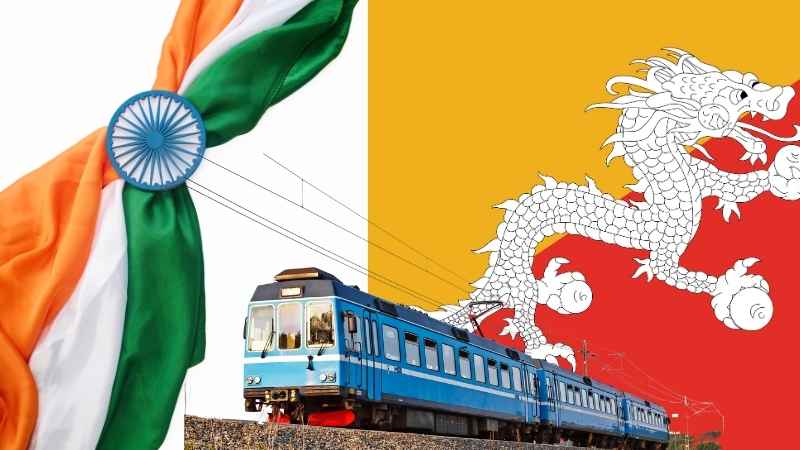
India-Bhutan have partnered to launch the first-ever cross-border railway projects, connecting India’s Kokrajhar (Assam) to Gelephu and Banarhat (West Bengal) to Samtse in Bhutan. With an investment of ₹4,033 crore, the two new lines will boost cargo, passenger movement, and regional economic growth while solidifying a historic partnership.
India and Bhutan have inked a landmark agreement for the Himalayan kingdom’s inaugural railway links, marking a new chapter in regional connectivity and friendship. The two lines—Kokrajhar to Gelephu (Assam-Bhutan) and Banarhat to Samtse (West Bengal-Bhutan)—will span a combined 89 kilometers and cater to both goods and passenger traffic. As reported in official briefings, these projects are part of India’s commitment as Bhutan’s number one trade partner and developmental ally in the region.
The total outlay for the project stands at ₹4,033 crore, of which the Kokrajhar-Gelephu segment accounts for ₹3,456 crore and Banarhat-Samtse for ₹577 crore. All funding comes from India, with advanced signaling systems and designs suitable for Vande Bharat trains, ensuring fast, safe, and modern transport. Railways officials also noted provisions for climate resilience and wildlife corridors, with full electrification to minimize environmental impact.
The rail links will directly benefit Bhutan’s upcoming Gelephu Mindfulness City project near Assam, envisioned as an economic hub connecting South and Southeast Asia, and the Samtse industrial zone bordering West Bengal. Enhanced rail connectivity is expected to catalyze trade, tourism, and cross-border cooperation, further strengthening India-Bhutan ties. The projects also align with broader regional transit agreements, facilitating exports from Nepal and Bangladesh via Indian rail lines to Bhutan.
Also Read: Sanchar Saathi Achieves 6 Lakh Mobile Recoveries, Says DoT
With work set to begin soon and expected completion in three to four years, these rail corridors symbolize strategic collaboration, economic opportunity, and sustainable development. The entire investment and technology are Indian, reflecting the depth of bilateral trust and future-driven partnership.

Financial & Data Analytics Specialist | Investigations & Research | NCFM Certified | Editor | Investment Analyst | Finance Blogger | Writer | Over 15+ years of experience, turning complex money matters into clear insights. Through my writing, I help readers navigate wealth, markets, and financial trends with confidence.